



















In this series I speak with professors about what they’re currently reading in their personal and professional lives and literature related to their studies.
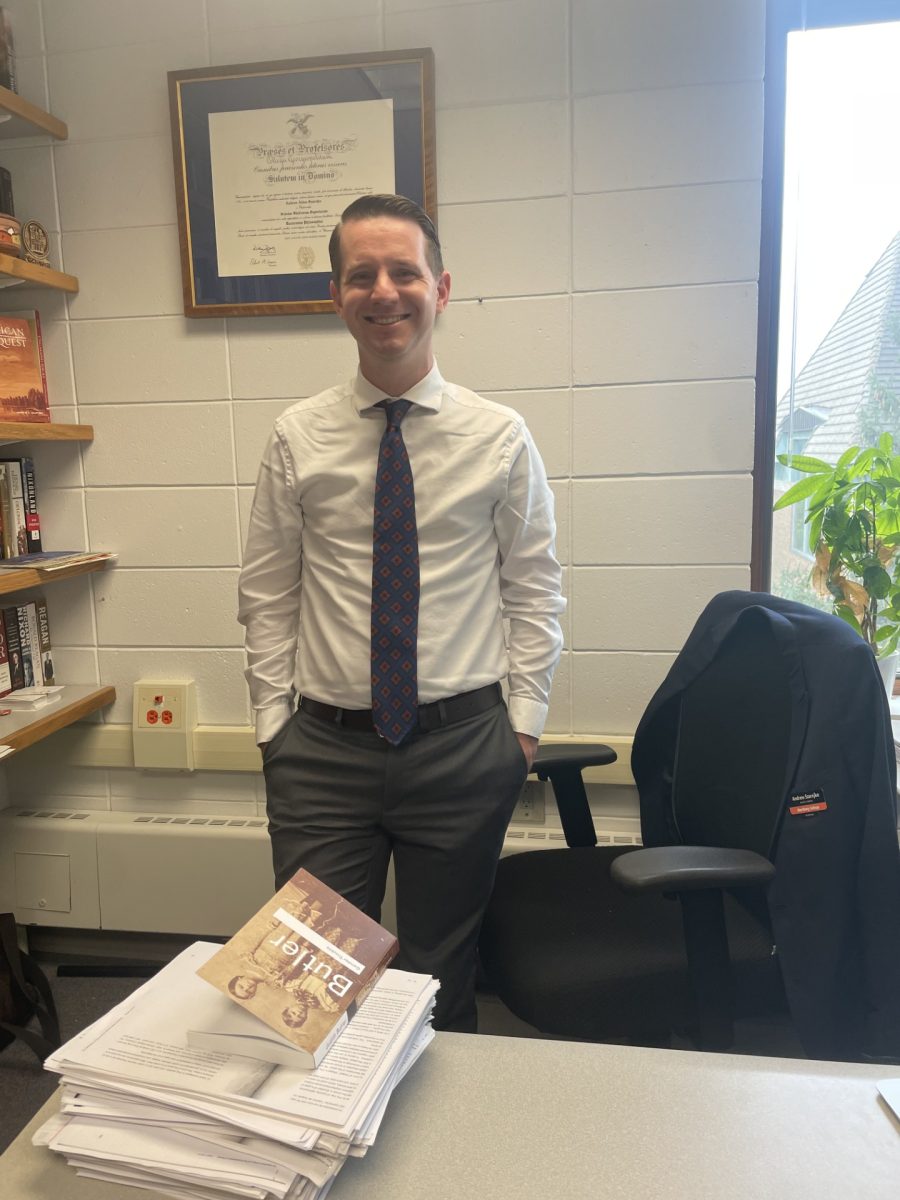
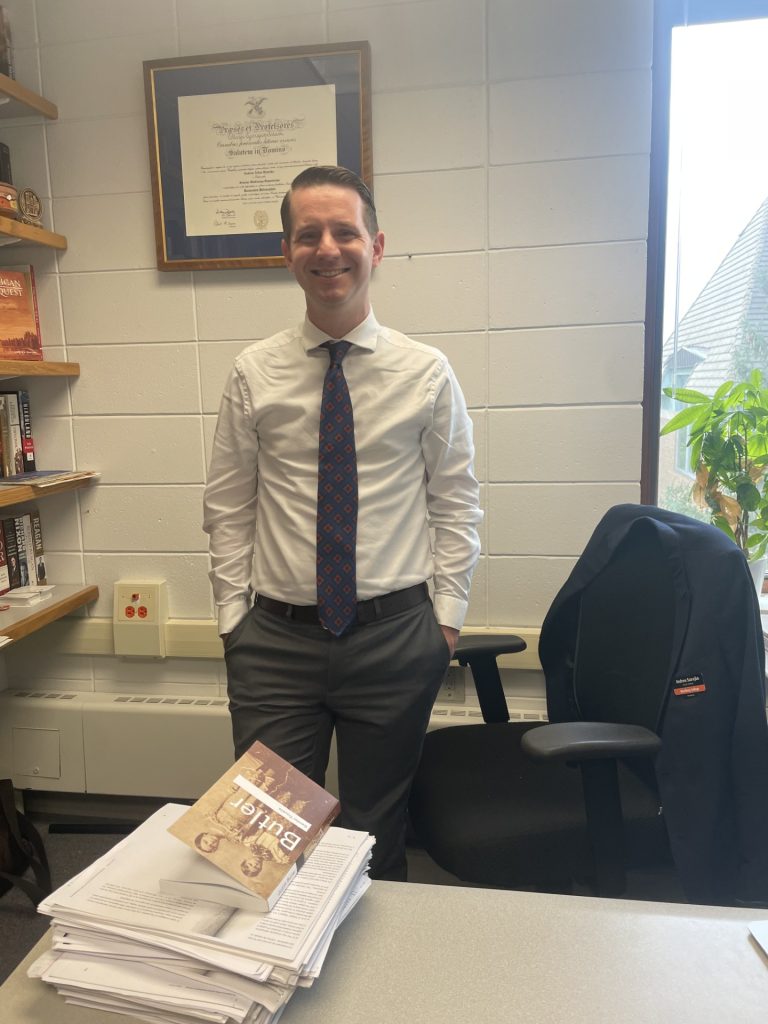
This past week I had the pleasure of meeting with Dr. Andrew Szarejko, a professor in the Social Sciences department. Dr. Szarejko is a political scientist with a focus on international relations and U.S. foreign policy. He recently wrote a book that came out with Stanford University Press that talks about the Northwest Indian War of 1790-1795, titled “American Conquest: The Northwest Indian War and the Making of US Foreign Policy.”
His interest in Indigenous People came from his graduate school dissertation, where he researched early U.S. expansion, and was ultimately drawn to the subject for the lack of prior research done on indigenous experiences.
Professionally, Szarejko believes that reading helps someone not only to keep up with their individual field, but to contribute towards it. He also believes it is important to keep up to date as a professor so that his students are well educated and are given the most recent information.
In class, he says he never assigns whole textbooks. This is not only for price, but because he wants students to receive a wide variety of perspectives. He did say, however, that there are some excerpts from books that students are reading such as Plato’s Republic and Coin-Operated Americans: Rebooting Boyhood at the Video Game Arcade by Carly A. Kocurek.
He reads fiction in a personal setting because, as he believes, “People try to use fiction in part to express truths in ways that non-fiction, academic writing does not.” He finds it interesting to explore those perspectives and use them to understand those around him.
In his free time, he has been reading a lot of horror novels and comic books, such as graphic novels and manga. For horror he enjoys a wide range between Gothic to contemporary. As for manga, he had a specific interest in Junji Ito’s writing, which he says mostly consists of body horror. Some of the titles he listed were Stephen King’s Carrie and E.M. Carol’s A Guest in the House.
If you’re interested in learning more about Dr. Szarejko’s area of expertise, he has a few recommendations:
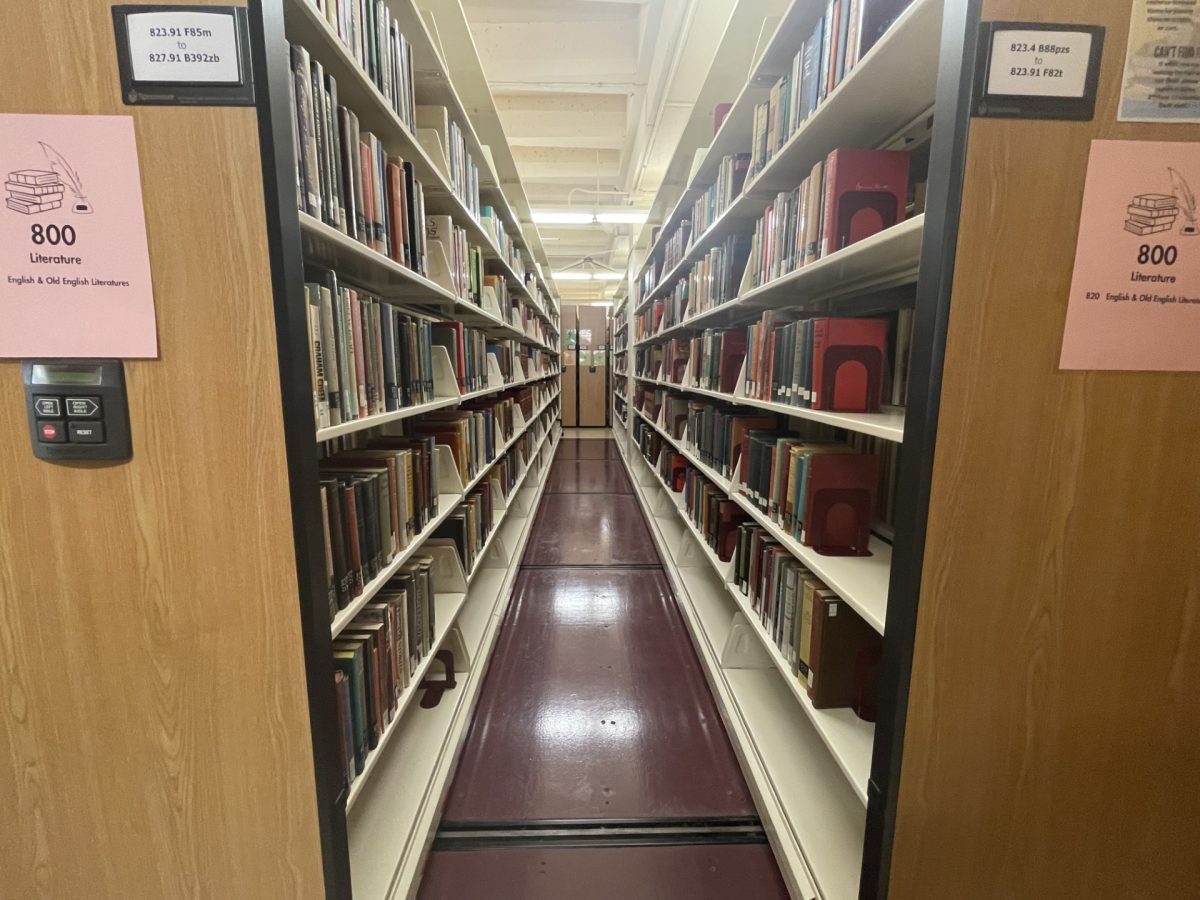
- The Federalist Papers written by Alexander Hamilton is a good place to start in political science, which can be read online on the Vogel Library page.
- For international relations, he recommends Man, the State, and War: A Theoretical Analysis by Kenneth Waltz, also available in the Vogel Library.
- Any book by Vine Deloria Jr. would be a good place to start for indigenous history. In particular, Dr. Szarejko recommends Custer Died for Your Sins: An Indian Manifesto. He says that Ned Blackhawk’s The Rediscovery of America is also a good choice. Both of these books are available at Vogel Library.
Head to Vogel Library’s website to check out these titles!